|
<< Click to Display Table of Contents >> Building relationships with quality providers |
  
|
|
<< Click to Display Table of Contents >> Building relationships with quality providers |
|
Developing relationships with like-minded healthcare professionals who provide quality services can be enormously beneficial. Most people are looking for good healthcare delivered promptly. By supporting injured workers to access appropriate care you can help them feel supported while streamlining their recovery path.
When considering healthcare providers, it's important to remember:
•it is always the worker's choice who they see for management of their work injury
•many workers with an existing relationship with a GP will prefer to see that provider
•when given options many workers will choose the most streamlined path to recovery.
Characteristics of effective providers
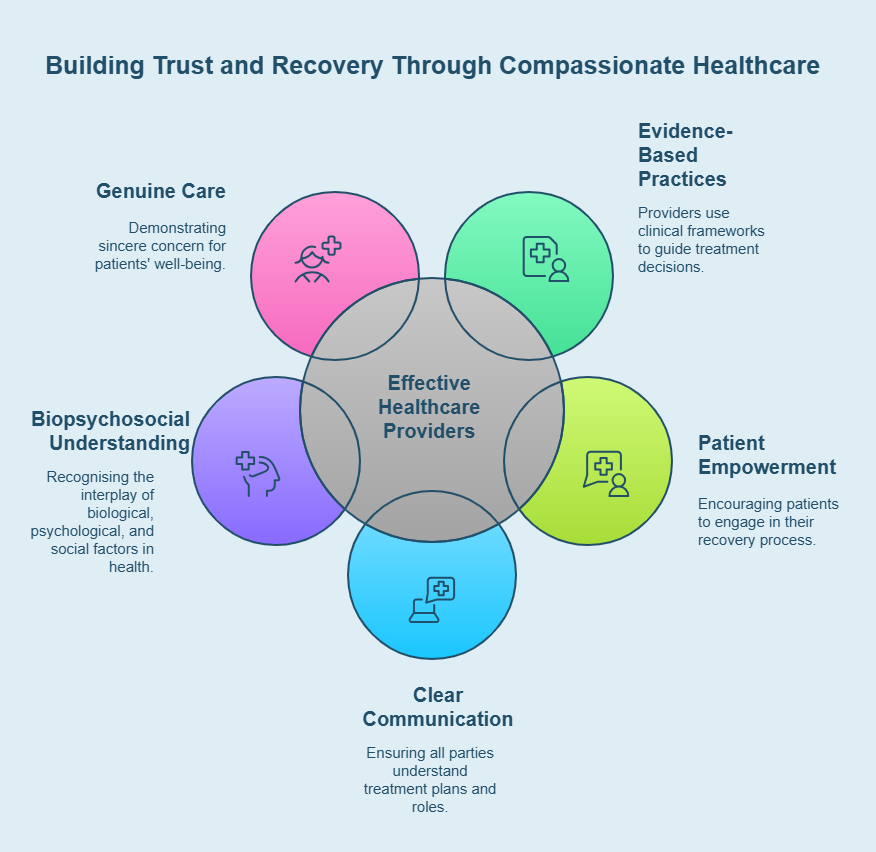
Healthcare professionals who align with best practice approaches tend to follow evidence-based clinical frameworks and empower patients to take an active role in their recovery. They often:
•engage patients in ‘homework’ and self-management strategies
•communicate clearly with all stakeholders
•understand the biopsychosocial framework and when to intervene, and above all,
•demonstrate genuine care for their patients' well-being.
Identifying suitable providers
When seeking healthcare providers to partner with look for those who have experience and expertise in occupational health and RTW.
Effective providers typically demonstrate a patient-centred, collaborative approach and are willing to communicate openly with employers and insurers. They focus on function and returning to normal activities, basing their treatment plans on current clinical guidelines.
It's best to avoid providers who:
•take an overly passive or prolonged approach to treatment
•rely heavily on passive therapies or rest
•demonstrate adversarial attitudes toward employers or insurers, or
•provide vague or open-ended medical certificates.
—they're more likely to communicate openly and provide clear, actionable RTW recommendations. |
