|
<< Click to Display Table of Contents >> Implementation challenges and best practices |
  
|
|
<< Click to Display Table of Contents >> Implementation challenges and best practices |
|
Implementing early psychosocial screening and matched care can significantly improve outcomes for injured workers and reduce costs for employers. However, introducing this new approach often comes with several challenges. Understanding these challenges and developing strategies to address them is crucial for successful implementation.
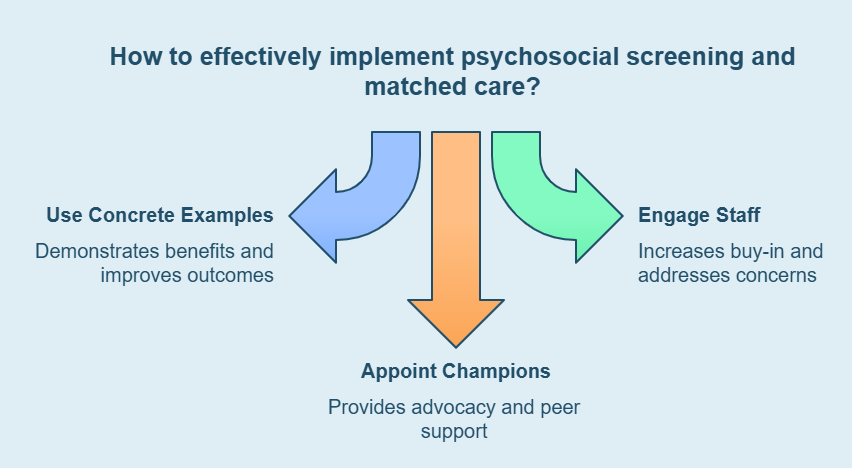
One of the most common challenges is resistance from staff who are accustomed to traditional approaches. Case managers, healthcare providers and other stakeholders may be hesitant to adopt new methods — particularly if they see them as adding complexity to their workload. To overcome this resistance it's essential to communicate the benefits of the new approach clearly and consistently. This can be done by: •providing concrete examples of how early psychosocial screening and matched care can improve outcomes for workers and make the job of case managers more rewarding •engage staff in the implementation process by seeking their input and addressing their concerns •appointing ‘champions’ in the organisation who can advocate for the new approach and support their colleagues through the transition.
|
Implementing a psychosocial screening and matched care approach requires specific knowledge and skills that staff may not initially possess — for example, understanding psychosocial factors, administering and interpreting screening tools and providing appropriate interventions. To address this challenge: •invest in comprehensive training programs for all staff involved in the process that includes initial training sessions that cover the fundamentals of the approach and ongoing professional development opportunities. •consider partnering with experts in the field to deliver training and provide ongoing support •developing user-friendly resources like quick reference guides and decision-support tools to help staff apply their new knowledge in practice.
|
Implementing a new system often requires additional resources — including staff time, technology investments and potentially new personnel. Organisations may struggle to allocate these resources, particularly if they're operating under tight budgets. To manage this challenge: •start by conducting a thorough cost-benefit analysis to demonstrate the long-term savings and improved outcomes that can result from the investment •consider implementing the new approach in phases, starting with a pilot program in one department or location. This allows you to refine the process and demonstrate its value before scaling up. •look for opportunities to integrate the new approach with existing processes and systems to minimise the need for additional resources. |
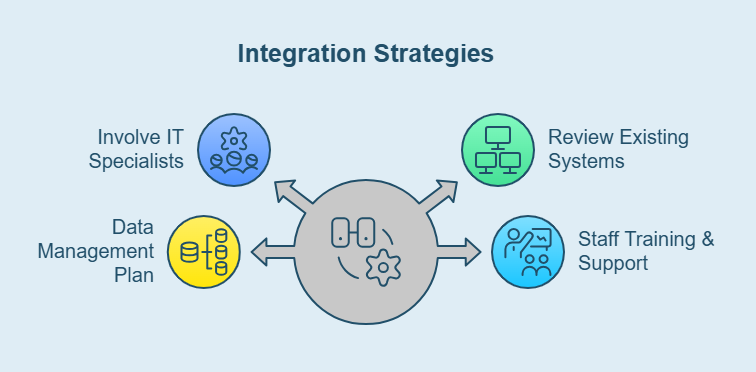
Integrating the new psychosocial screening and matched care approach with existing processes, databases and tools can be technically challenging and may disrupt established workflows. To smooth this integration: •involve IT specialists early in the planning process •conduct a thorough review of existing systems and identify potential points of integration •develop a clear plan for data management and ensure that psychosocial screening data can be easily incorporated into case management records •provide training and support for staff as they learn to use any new or modified systems. Consider appointing "super users" who can provide peer support and troubleshooting assistance.
|
It can be challenging to ensuring that all staff consistently follow the new protocols and adhere to evidence-based practices, especially if there is high staff turnover or competing priorities. To maintain consistency: •develop clear, standardised protocols and guidelines for each step of the process — from initial screening to intervention planning •create checklists and decision-support tools to guide staff through the process •implement regular quality assurance checks to ensure staff are adhering to protocols •provide ongoing supervision and support, including opportunities for case discussion and peer learning.
|
Collecting and storing sensitive personal and health information requires robust data management systems and strict adherence to privacy regulations. This can be particularly challenging when implementing new digital tools or sharing information across different stakeholders. Address this challenge by: •conducting a thorough privacy impact assessment before implementation •develop clear policies and procedures for data collection, storage and sharing to ensure compliance with relevant privacy laws •provide training for all staff on data privacy and security practices •implement technical safeguards, such as encryption and secure access controls, to protect sensitive information. |
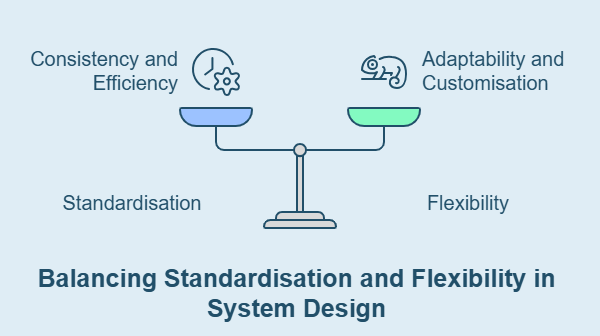
While standardised protocols are important, the system must also be adaptable to the unique needs and contexts of different organisations, industries and worker populations. Striking the right balance between standardisation and flexibility can be challenging. To address this: •involve key stakeholders from different parts of the organisation in the planning and implementation process •conduct a needs assessment to identify any unique requirements or constraints in your organisation •build in opportunities for feedback and adjustment as the system is implemented •consider creating modular components that can be customised for different departments or types of injuries while maintaining core elements of the approach.
|
Ensuring the long-term sustainability of the new approach requires ongoing resources, support and commitment from leadership. It can be challenging to maintain momentum and prevent regression to old practices over time. To promote sustainability: •embed the new approach into organisational policies and procedures •develop key performance indicators to track the impact of the program over time and regularly report on these to leadership •create a community of practice in the organisation to support ongoing learning and improvement •celebrate successes and share positive outcomes to maintain enthusiasm and commitment •periodically review and refresh the program to ensure it remains aligned with current best practices and organisational needs. By anticipating these challenges and proactively developing strategies to address them, organisations can increase their chances of successfully implementing and sustaining an early psychosocial screening and matched care approach. This investment in thoughtful planning and ongoing support can lead to significant improvements in outcomes for injured workers and long-term benefits for the organisation.
|