|
<< Click to Display Table of Contents >> Key components of effective RTW systems |
  
|
|
<< Click to Display Table of Contents >> Key components of effective RTW systems |
|
To achieve the benefits of an effective RTW system, organisations should incorporate these key elements:
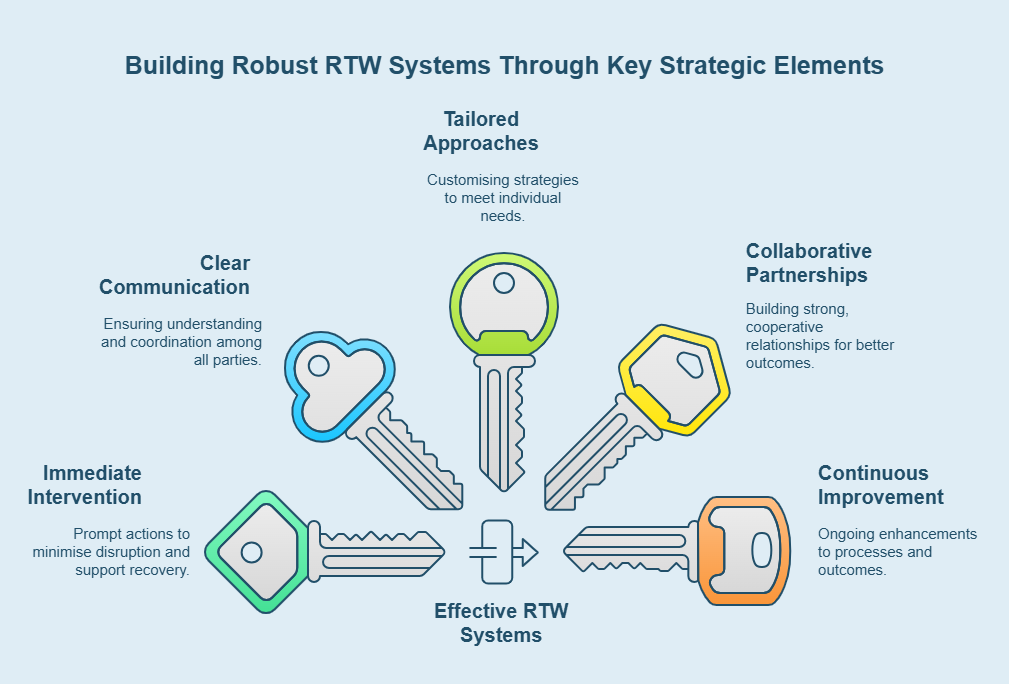
Immediate or early intervention
Prompt reporting and action can significantly improve outcomes and reduce claim duration. This involves establishing systems for quick injury reporting and initiating the RTW process as soon as possible after an injury occurs.
Clear communication
Ensuring all stakeholders — injured workers, supervisors, healthcare providers and RTW coordinators — are informed and involved throughout the RTW process with regular, transparent communication so that everyone is aligned on the RTW plan and progress.
Tailored approaches
This recognises that each case is unique and requires individualised planning. It involves assessing the specific needs of each injured worker and developing personalised RTW plans that account for their physical condition, job requirements and psychosocial factors.
Collaborative partnerships
Fostering cooperation between workers, employers, healthcare providers and insurers ensures that all parties work together towards the common goal of a successful return to work, share information and coordinate their efforts effectively.
Continuous improvement
This means regularly evaluating and refining processes based on outcomes and feedback. This can be done by tracking key performance indicators, soliciting feedback from all stakeholders and using this information to make ongoing improvements to the RTW system.
Over the past decade, a growing body of evidence has highlighted the significant role of psychosocial barriers in work disability. Factors such as passive coping strategies or poor workplace culture have been identified as major drivers of long-term work disability. Importantly, research has shown that we can identify these psychosocial barriers early in the injury process, often within weeks, and that addressing them promptly can substantially improve outcomes.