|
<< Click to Display Table of Contents >> Why good systems matter |
  
|
|
<< Click to Display Table of Contents >> Why good systems matter |
|
Developing effective return to work (RTW) systems is crucial for several reasons:
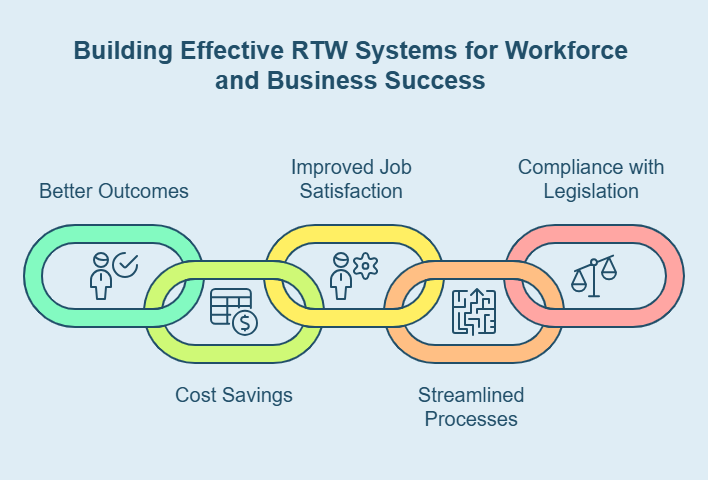
Better outcomes for workers
Well-designed RTW systems lead to faster recovery, reduced disability, and improved long-term health outcomes for injured workers. By providing timely support and appropriate interventions these systems can help workers regain their health and return to productive employment more quickly.
Cost savings for businesses
Effective systems reduce the duration of claims, lower insurance premiums and minimise productivity losses. When workers return to work sooner businesses benefit from reduced wage replacement costs and improved overall productivity.
Improved job satisfaction
For those managing the RTW process good systems make the job easier, more rewarding and less stressful. Clear processes and guidelines help RTW coordinators and managers navigate complex cases more efficiently.
Streamlined processes
Well-implemented systems reduce bureaucracy, minimise conflicts and create clear pathways for all stakeholders. This efficiency benefits everyone involved in the RTW process — workers, supervisors and employers to healthcare providers and insurers.
Enhanced workplace culture
Effective RTW systems contribute to a positive workplace culture, which fosters trust and cooperation between employees and management.
Compliance with legislation
Good RTW systems help organisations meet their legal obligations under the psychosocial hazard prevention legislation that has been rolled out across the country. These systems address potential psychosocial hazards during the RTW process — such as poor communication with supervisors, assignment of duties outside agreed parameters or lack of support.
Let's now examine the key components that make these systems successful.