|
<< Click to Display Table of Contents >> Preventing psychosocial hazards during return to work |
  
|
|
<< Click to Display Table of Contents >> Preventing psychosocial hazards during return to work |
|
Workers returning to work after an injury or illness are often in a vulnerable position, both physically and emotionally. This period of transition can be challenging and workers benefit greatly from support and understanding.
A thorough risk assessment should identify potential psychosocial hazards specific to the RTW process. Some common hazards include:
Insufficient support from the workplace can manifest in various ways: •Poor communication about the RTW process •Provision of meaningless or unsuitable duties •Insensitivity or lack of support from co-workers •Limited or no contact from relevant people at work (for example, supervisors or HR). |
Well-meaning colleagues may inadvertently cause distress by: •making comments they believe are humorous but are insensitive or hurtful •asking intrusive questions about the worker's injury or absence •expressing doubt about the severity of the injury or their need for accommodations. |
Assigning tasks that are incompatible with the worker's current capabilities can create stress and impede recovery. For example: •giving duties outside agreed RTW plans •pressuring the worker to take on more responsibilities before they're ready •failing to adjust workload or expectations appropriately •stigma or changed workplace dynamics. |
The injury and time away from work may lead to the worker: •having doubts about their ability to perform job tasks •feeling anxiety about re-injury or making mistakes •feeling overwhelmed by the RTW process
|
•altered relationships with co-workers or supervisors •feeling isolated or out of the loop due to their absence •concerns about job security or career progression. |
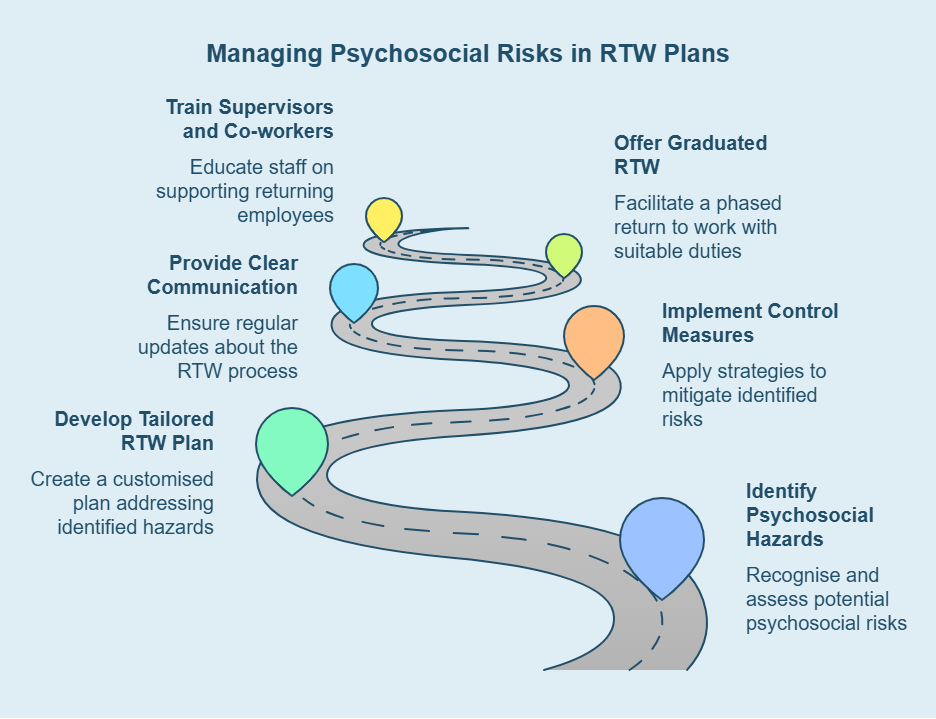
To effectively manage these risks organisations can:
•develop a tailored RTW plan that addresses identified psychosocial hazards
•implement control measures, such as:
▪providing clear, regular communication about the RTW process
▪offering a graduated return to work with meaningful, appropriate duties
▪training supervisors and co-workers on how to support returning colleagues
▪establishing a buddy system or mentoring program for additional support
▪regularly reviewing and adjusting the RTW plan as needed.
By proactively identifying and managing these psychosocial hazards, organisations can create a supportive environment that facilitates a smooth and successful return to work that benefits both the worker and the workplace.