|
<< Click to Display Table of Contents >> Engaging supervisors: Key players in successful RTW |
  
|
|
<< Click to Display Table of Contents >> Engaging supervisors: Key players in successful RTW |
|
Supervisors play a crucial role in the RTW process. They are often the first point of contact when an injury occurs and have a significant impact on the injured worker's experience throughout their recovery and return to work. However, supervisors need proper support, training and guidance to effectively fulfil this important role, especially when dealing with more complex cases.
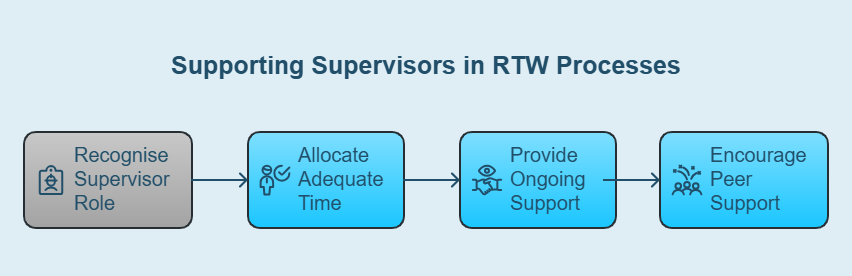
To ensure supervisors can effectively manage RTW processes, organisations should: Recognise the importance of their role Acknowledge that supervisors are pivotal in successful RTW outcomes and ensure this is reflected in their job descriptions and performance evaluations. Provide adequate time Ensure supervisors are allocated enough time to manage RTW processes alongside their other responsibilities. Offer ongoing support Provide supervisors with access to RTW specialists, HR professionals or occupational health experts for advice and guidance. Encourage peer support Facilitate networking opportunities for supervisors to share experiences and best practices in managing RTW cases. |
Comprehensive training programs are essential for equipping supervisors with the skills and knowledge they need to manage the RTW process effectively. These programs should cover these topics to ensure they are well-prepared for their role: •The basic principles of RTW — including the benefits of early RTW and the importance of suitable duties. •Communication skills — supervisors need to know how to maintain appropriate contact with injured workers and facilitate discussions about RTW. •Techniques for analysing jobs and identifying appropriate tasks for returning workers. •Mental health awareness — they need to be able to recognise signs of mental health issues and understand how to provide support. •Conflict resolution skills — they may need to manage disagreements or tensions that arise during the RTW process. •Finally, supervisors need to have a clear understanding of the organisation's RTW policies and relevant legal obligations to ensure compliance and best practice. |
job analysis, and mental health awareness—experience more successful return to work outcomes. |
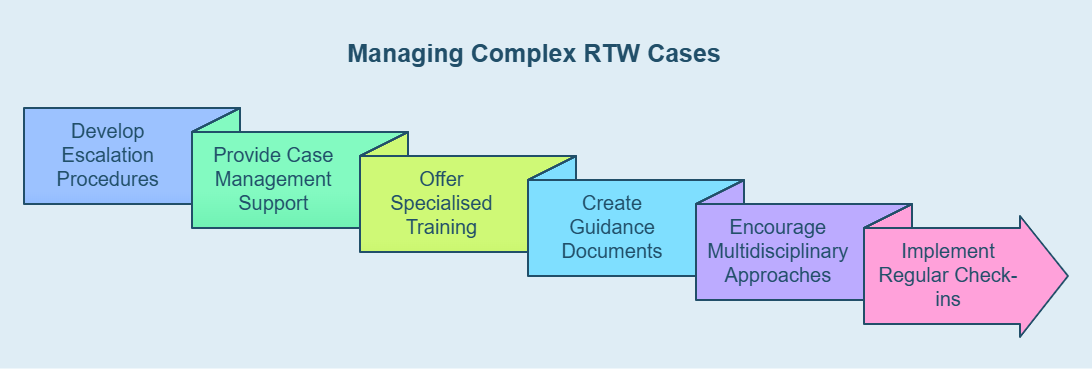
Complex RTW cases require organisations to provide additional support and guidance for supervisors: Develop clear escalation procedures. Establish protocols for when and how supervisors should seek additional support for complex cases. Provide case management support. Assign RTW coordinators or case managers to work alongside supervisors on more challenging cases. Offer specialised training. Provide advanced training modules that focus on managing complex RTW scenarios, such as cases involving mental health issues or long-term absences. Create detailed guidance documents. Develop comprehensive guides or checklists for managing complex RTW cases that give supervisors a clear framework to follow. Encourage multidisciplinary approaches. Foster collaboration between supervisors, HR, occupational health professionals and external specialists when needed. Regular check-ins. Implement a system of regular check-ins between supervisors and RTW coordinators or HR to discuss progress and challenges in complex cases. Provide emotional support. Recognise that managing complex RTW cases can be stressful for supervisors and ensure they have access to emotional support or counselling if needed.
|
To further engage supervisors in the RTW process: Involve them in policy development. Include supervisors in the creation and review of RTW policies and procedures. Recognise good performance. Acknowledge and reward supervisors who effectively manage RTW processes and achieve positive outcomes. Encourage proactive approaches. Empower supervisors to initiate early intervention strategies and preventive measures to reduce workplace injuries. Provide feedback channels. Create mechanisms for supervisors to provide feedback on the RTW process and suggest improvements. By providing comprehensive support, training and guidance to supervisors, organisations can significantly enhance the effectiveness of their RTW programs. This investment in supervisor capabilities not only improves outcomes for injured workers but also contributes to a more positive and supportive workplace culture overall. |
|