|
<< Click to Display Table of Contents >> Early intervention programs |
  
|
|
<< Click to Display Table of Contents >> Early intervention programs |
|
Early intervention programs have gained popularity among forward-thinking organisations as an effective approach to managing work-related injuries and illnesses. These programs typically offer employees access to a limited number of medical consultations, such as GP visits or physiotherapy sessions, without the need to lodge a formal workers' compensation claim. For example, an organisation might fund up to 4 GP appointments or physiotherapy sessions whether the condition is work-related or not.
Advantages of early intervention programs
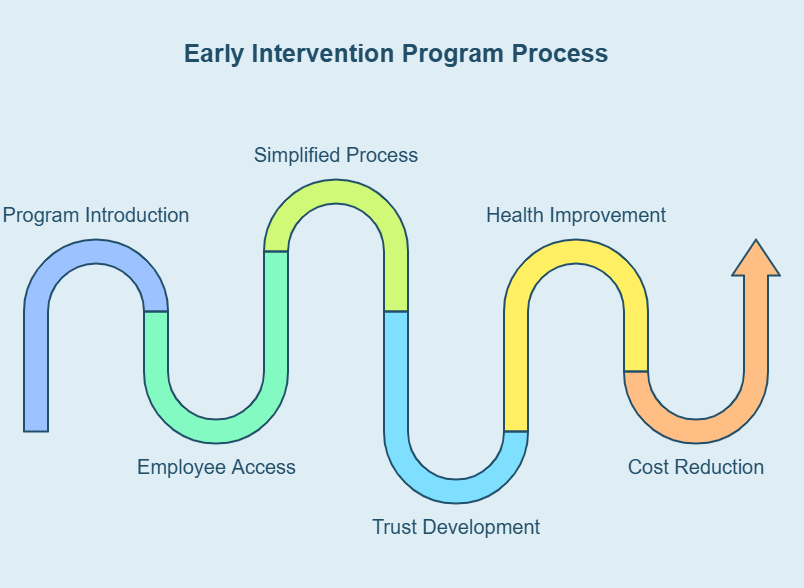
The main advantages of early intervention programs lie in their immediacy and simplicity. By removing administrative barriers and potential stigma associated with formal claims, they encourage workers to seek help promptly when issues first arise.
This early action can prevent minor problems from escalating into more serious conditions that require extensive treatment and prolonged time away from work.
Early intervention programs also help develop trust between employees and management. Workers appreciate the proactive approach to their health and the removal of barriers to seeking care. This positive experience can translate into a culture of open communication about health and safety in the workplace.
Features of early intervention programs
These programs are designed to be streamlined and supportive, often featuring simplified approval processes and direct billing arrangements with preferred healthcare providers. This approach facilitates quick access to care and shows the employer's commitment to worker well-being.
While not all injuries or illnesses can be resolved through early intervention, these programs serve as a valuable first line of defence in maintaining a healthy, productive workforce. They complement more comprehensive workers' compensation systems, potentially reducing the number of formal claims and associated costs over time.