|
<< Click to Display Table of Contents >> Injury reporting systems |
  
|
Injury reporting systems
|
<< Click to Display Table of Contents >> Injury reporting systems |
|
Improvements to injury reporting systems are one of the most cost-effective ways to improve RTW outcomes. The employer’s response on the day of injury has a huge impact on how quickly an employee returns to work and influences whether employees and employers will be partners or adversaries in managing the case.
Reporting systems are the lynchpin of day-one management. They set the tone for subsequent interactions and interventions. A well-designed reporting system ensures timely notification of injuries and initiates the cascade of support and resources needed for optimal recovery and RTW.
Prompt and accurate reporting allows for:
•early intervention and appropriate medical care
•timely initiation of the RTW process
•better communication between all stakeholders
•more accurate data collection for ongoing program improvement
•compliance with legal and regulatory requirements
This section explores the key components of effective injury reporting systems and provides guidance on choosing and implementing the right approach for each organisation. By prioritising the development of a robust injury reporting system organisations lay the groundwork for a more efficient, responsive and successful RTW program.
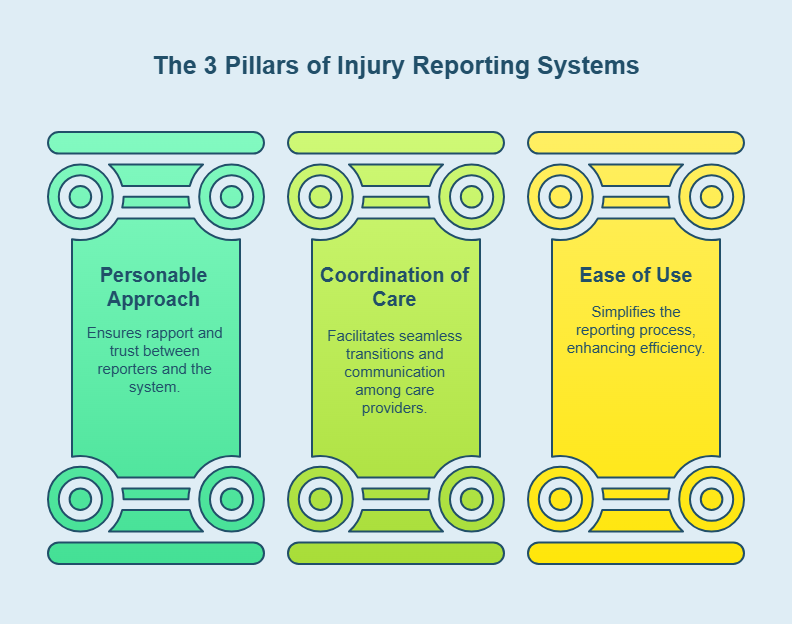
The three pillars of effective injury reporting systems are a personable approach, coordination of care, and ease of use.
Getting the reporting structure right prevents a host of problems, including:
•late reporting of issues
•employees feeling disenfranchised by negative reactions to injury reporting
•delays in medical care
•cases being lost in the system and not followed up
•loss of control of case management, and
•unnecessary costs.