|
<< Click to Display Table of Contents >> Choosing the right reporting system — the pros and cons |
  
|
|
<< Click to Display Table of Contents >> Choosing the right reporting system — the pros and cons |
|
When it comes to injury reporting systems, one size doesn't fit all. Each organisation has its own needs and constraints. In this section we explore the strengths and weaknesses of the main options to help organisations find the right fit for their workplace.
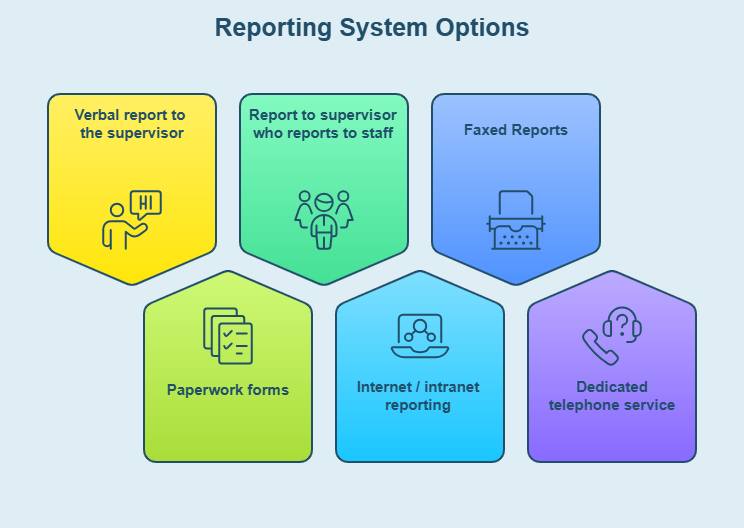
The personal touch: Verbal report to the supervisor
Imagine a factory worker immediately telling her supervisor about a minor hand injury. This direct approach can lead to quick action and build trust.
Pros
•Fosters immediate, personal communication between employee and supervisor.
•Allows for quick assessment and response to the situation.
Cons
•Effectiveness hinges on the supervisor's training and experience.
•May lack consistent documentation if not followed up properly.
The digital route: Internet or intranet reporting
Picture a large corporate office where employees log injuries through an online portal. It's quick and efficient, but is it right for everyone?
Pros
•Information is disseminated rapidly across the organisation.
•An immediate digital record is created.
Cons
•Can be challenging for workers who don’t have regular computer access.
•May feel impersonal, potentially disengaging employees from the process.
Old school but dependable: Paperwork forms
In a small construction company, workers fill out injury report forms kept in their trucks. It's simple but has its drawbacks.
Pros
•A cost-effective method, especially for smaller organisations
•Familiar format for many workers.
Cons
•Forms may be incomplete or provide limited information.
•Inefficient for sharing information across departments
The fax machine lives on: Faxed reports
A medical clinic still uses faxes for injury reports. It's faster than mail, but is it the best option in the digital age?
Pros
•Quicker than traditional mail.
•Can be integrated into rapid information-sharing systems.
Cons
•Feels outdated and impersonal.
•Risk of lost or misplaced reports.
The chain of command: Report to supervisor, who then reports to other staff
In a retail store an employee reports an injury to their manager, who then informs HR and other relevant parties. It's personal but relies heavily on the supervisor.
Pros
•Allows for immediate reporting and personal interaction.
•Can lead to quick action when well-coordinated.
Cons
•Lack of oversight can compromise transparency and accountability.
•Heavily dependent on the supervisor's skills and responsiveness.
The hotline approach: Dedicated telephone service
A large manufacturing plant sets up a 24/7 injury reporting hotline. It's comprehensive but comes with a price tag.
Pros
•User-friendly for both supervisors and employees.
•Provides high-quality, consistent information-gathering
•Allows for the immediate understanding of the employee concerns, streamlining the next steps, appropriate healthcare and appropriate duties.
Cons
•Can be costly to implement and maintain.
•May not be feasible for smaller organisations.
Key takeaways
•Consider your organisation's size, budget and workforce when choosing a system.
•The best systems balance efficiency with personal interaction
•Digital solutions offer speed but may lack the human touch.
•Whatever system you choose, ensure it is consistently applied and well-understood by all employees.
The goal is to create a reporting system that encourages prompt, accurate reporting while making employees feel supported and valued. By weighing the pros and cons of each option, an approach can be selected that best serves the organisation's needs and promotes a culture of safety and open communication.
Summary of pros and cons of each system
The table below summarises the pros and cons of each system.
Pros and cons of reporting systems (modified from Day of Injury study^)
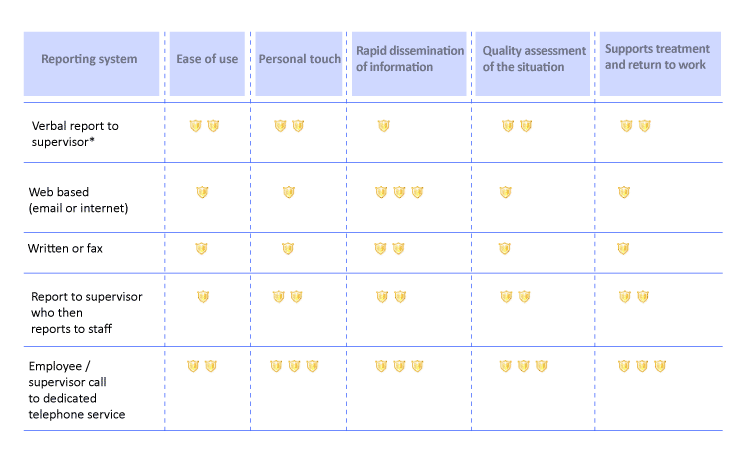
*dependent on training and competence of supervisor
A dedicated telephone reporting system is thus the best system for ‘covering all bases.’