|
<< Click to Display Table of Contents >> Integrated approach to psychosocial safety: Prevention and recovery |
  
|
|
<< Click to Display Table of Contents >> Integrated approach to psychosocial safety: Prevention and recovery |
|
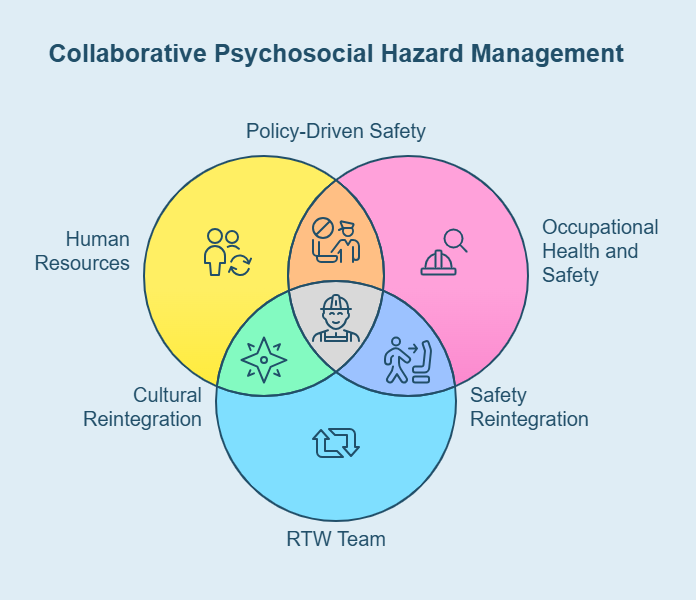
The principles underlying the prevention of psychosocial hazards closely mirror those used in establishing an effective RTW system. Both require systematically exploring potential hazards and implementing strategies to manage them. By recognising this connection, organisations can create a seamless continuum of care that extends from proactive prevention to responsive post-injury support.
In both scenarios, the process involves:
•Identifying potential psychosocial hazards in the workplace
•assessing the risks associated with these hazards
•implementing control measures to eliminate or minimise risks
•regularly reviewing and adjusting strategies as needed.
An integrated approach to preventing and managing psychosocial hazards in the workplace is achieved through a combined effort from Human Resources (HR), Occupational Health and Safety (OHS), and the RTW team. Each of these groups brings unique expertise and perspectives:
•HR contributes knowledge of organisational policies, employee relations and workplace culture.
•OHS provides expertise in risk assessment, hazard prevention and safety management systems.
•The RTW team offers insights into the challenges faced by injured workers and effective strategies to reintegrate them into the workplace.
Together the team can create a comprehensive psychosocial safety strategy that addresses prevention, intervention and RTW processes.
Regular communication and coordination between these departments can help identify emerging issues, share best practices and develop integrated solutions that support worker wellbeing throughout the employment lifecycle.
This integrated approach maximises the opportunity for psychosocial safety to be embedded in all aspects of the organisation — from recruitment and day-to-day operations to injury management and employee reintegration.
It also ensures that the workplace is not only prepared to prevent psychosocial injuries but is also equipped to provide appropriate support when injuries do occur. By aligning prevention and post-injury care strategies organisations can create a more resilient and supportive work environment.